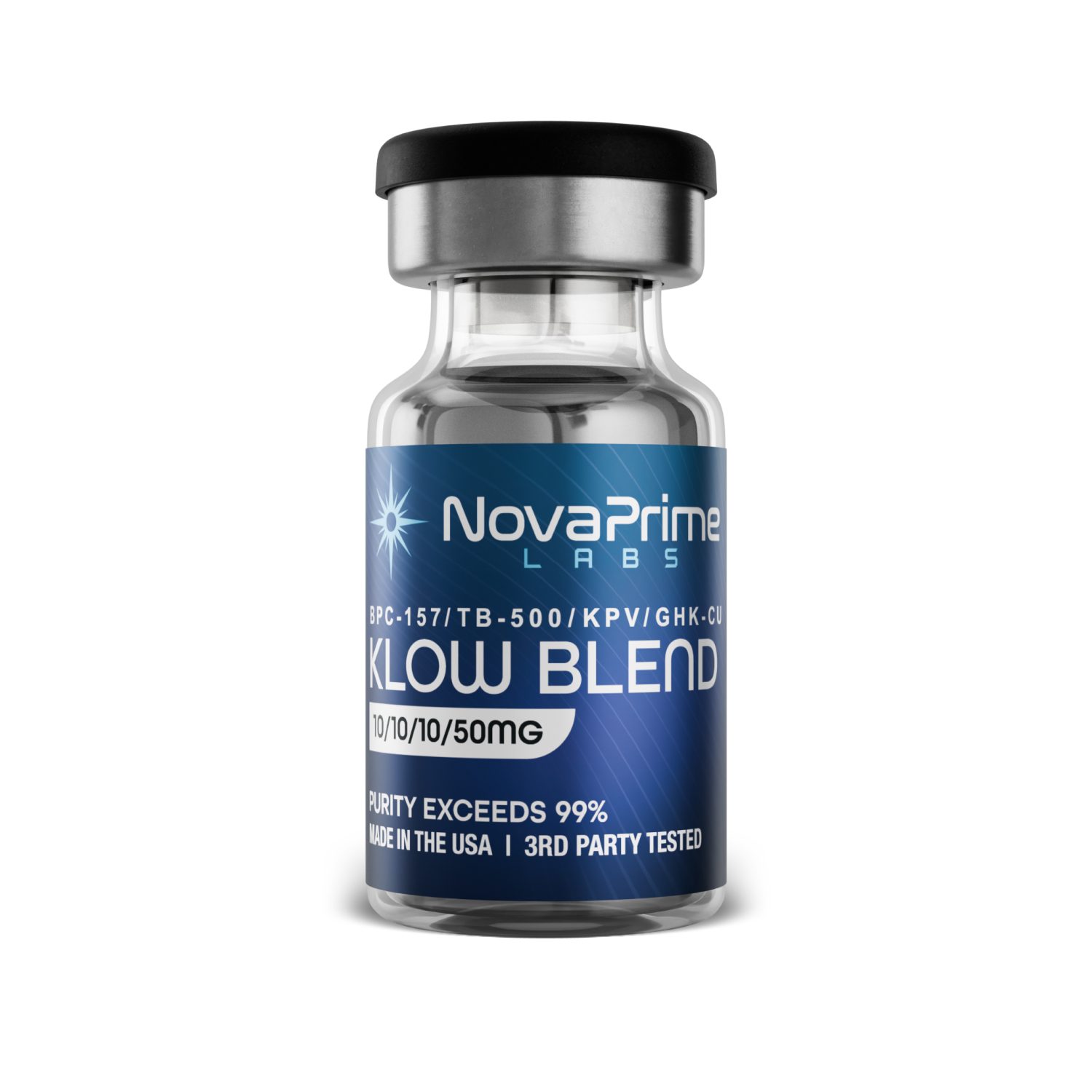
KLOW Blend

$199.99

Bundle & save

KLOW Blend

$199.99

Bundle & save

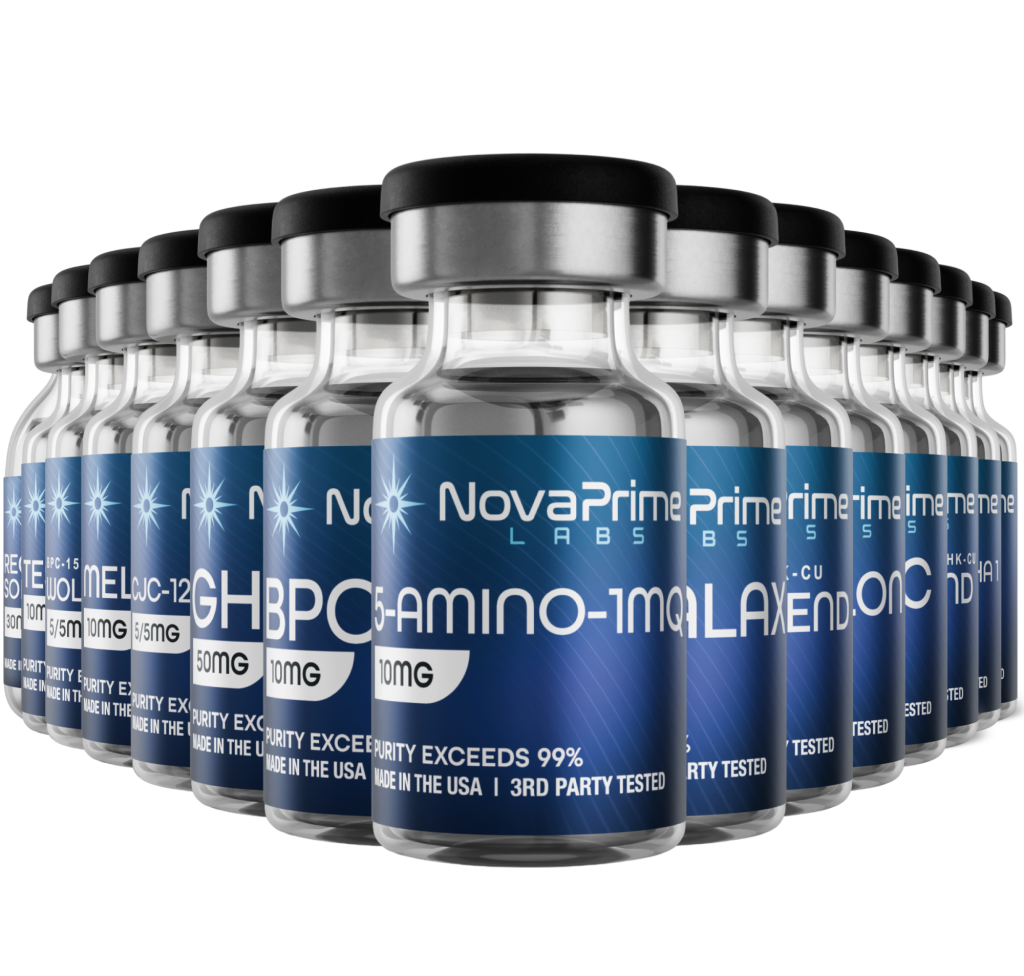
KLOW blend combining GHK-Cu, BPC-157, TB-500, and KPV for laboratory research of tissue repair, vascular formation, and cellular signaling in vitro.

In stock

Description

This synthetic peptide blend combines four regenerative peptides into a single vial for studies examining complementary tissue regeneration and inflammation reduction pathways:

GHK-Cu up-regulates wound healing processes and drives collagen production, elastin, and angiogenic growth-factor expression in laboratory models. BPC-157 (Body Protection Compound-157) exhibits gastro-protective, soft-tissue repair, and anti-inflammatory actions through nitric-oxide signaling, growth-factor receptor modulation, and cytokine balance. TB-500 (Thymosin Beta-4 Fragment) enhances cell migration and angiogenesis via actin-sequestering and integrin-linked pathways. KPV (Lys-Pro-Val) functions as an anti-inflammatory tripeptide that modulates immune signaling cascades, inhibits inflammatory cytokine production, and regulates mast cell activation without melanocortin receptor binding.
Researchers can examine potential synergy across copper-mediated extracellular-matrix activation (GHK-Cu), cytoprotective signaling (BPC-157), actin-dependent cell motility (TB-500), and immune-modulatory pathways (KPV). In vitro and ex vivo models evaluate collagen deposition rates, angiogenic indices, inflammatory marker expression, and controlled tissue recovery metrics.

Composition: 80 mg lyophilized blend per vial
50 mg GHK-Cu | 10 mg BPC-157 | 10 mg TB-500 | 10 mg KPV

Properties of GHK-Cu

  • Peptide Sequence: Gly-His-Lys.Cu.xHAc
  • Chemical Formula: C₁₄H₂₃CuN₆O₄
  • Molecular Mass: 401.91 g/mol
  • CAS Number: 89030-95-5
  • PubChem: 73587

Properties of BPC-157

  • Peptide Sequence: Gly-Glu-Pro-Pro-Pro-Gly-Lys-Pro-Ala-Asp-Asp-Ala-Gly-Leu-Val
  • Chemical Formula: C₆₂H₉₈N₁₆O₂₂
  • Molecular Mass: 1419.5 g/mol
  • CAS Number: 137525-51-0
  • PubChem: 9941957

Properties of TB-500

  • Peptide Sequence: Ac-Ser-Asp-Lys-Pro-Asp-Met-Ala-Glu-Ile-Glu-Lys-Phe-Asp-Lys-Ser-Lys-Leu-Lys-Lys-Thr-Glu-Thr-Gln-Glu-Lys-Asn-Pro-Leu-Pro-Ser-Lys-Glu-Thr-Ile-Glu-Gln-Glu-Lys-Gln-Ala-Gly-Glu-Ser
  • Chemical Formula: C₂₁₂H₃₅₀N₅₆O₇₈S
  • Molecular Mass: 4963.55 g/mol
  • CAS Number: 77591-33-4
  • PubChem: 16132341

Properties of KPV

  • Peptide Sequence: Lys-Pro-Val
  • Chemical Formula: C₁₇H₃₂N₆O₄
  • Molecular Mass: 384.48 g/mol
  • CAS Number: 67727-97-3
  • PubChem: 125672

Vial Size: 3ml

Lyophilized Peptides:

All four peptides are supplied in a freeze-dried, filler-free state to maximize stability and preserve chemical integrity during refrigerated or frozen storage. Reconstitute with sterile solvent immediately prior to experimental use and store aliquots at ≤ –20 °C to prevent repeated freeze–thaw cycles.


This content is provided strictly for research purposes and does not constitute an endorsement or recommendation for the non-laboratory application or improper handling of peptides designed for research. The information, including discussions about specific peptides and their researched benefits, is presented for informational purposes only and must not be construed as health, clinical, or legal guidance, nor an encouragement for non-research use in humans. Peptides described here are solely for use in structured scientific study by authorized individuals. We advise consulting with research experts, medical practitioners, or legal counsel prior to any decisions about obtaining or utilizing these peptides. The expectation of responsible, ethical utilization of this information for legitimate investigative and scholarly objectives is paramount. This notice is dynamic and governs all provided content on research peptides.

Laboratory investigations reveal synergistic mechanisms for cellular repair, vascular formation, and inflammatory modulation—valuable tools for in vitro research applications.

Angiogenesis and Vascular Formation
BPC-157 demonstrates a unique mechanism by upregulating VEGFR2 expression without affecting VEGF-A levels. This unusual pathway activates the VEGFR2-Akt-eNOS signaling cascade in vascular endothelial cell cultures[1].

GHK-Cu increased VEGF and bFGF expression by 230% in irradiated human dermal fibroblasts at nanomolar concentration[2]. Liposomal delivery systems showed 33.1% increased HUVEC proliferation rates with enhanced expression of cell cycle proteins[3].

TB-500 acts as a potent endothelial cell chemoattractant, stimulating 4-6-fold increases in HUVEC migration[4]. The peptide’s seven amino acid sequence LKKTET shows activity at approximately 50 nanomolar concentration.

Tissue Repair and Regeneration
The actions of the GHK-Cu peptide include modulating 31.2% of human genes (4,192 genes) with ≥50% expression changes[5]. The peptide binds to integrin-linked kinase on cell membranes, activating ILK-related pathways.

BPC-157 promotes tissue regeneration through FAK-paxillin pathway activation. This mechanism dramatically increases phosphorylation of focal adhesion kinase and paxillin proteins without changing total protein amounts[6].

TB-500’s regenerative effects stem from G-actin sequestration activity—binding monomeric G-actin in a 1:1 ratio. Rat wound healing models demonstrated 42-61% increased reepithelialization with enhanced collagen deposition[7].

Collagen Synthesis and Extracellular Matrix
GHK-Cu stimulates collagen synthesis at picomolar to nanomolar concentrations[8]. The peptide increased decorin production by 302% and stimulated glycosaminoglycan accumulation in skin fibroblasts.

BPC-157 enhances collagen formation across multiple tissue types in animal models. Studies show significantly increased collagen, reticulin, and blood vessel formation[9].

TB-500 demonstrates anti-fibrotic properties while promoting organized collagen deposition. Treated wounds show tightly organized mature collagen fibers with reduced myofibroblast formation[10].

Inflammatory Modulation
GHK-Cu works to reduce inflammation by inhibiting NF-κB p65 and p38 MAPK pathways. The peptide decreased ROS levels and reduced production of pro-inflammatory cytokines TNF-α and IL-6 in macrophage cell cultures[2].

BPC-157 decreased TNF-α, IL-6, and IL-1β levels in tissue samples. The peptide reduced COX-2 gene expression and myeloperoxidase activity in various inflammation models[11].

TB-500 exhibits biphasic regulation of the inflammatory response. The peptide downregulates TNF-α (6.2-fold reduction) and IL-6 (4.1-fold reduction) while upregulating anti-inflammatory IL-10 (8.1-fold increase)[12].

KPV inhibitsNF-κB activation at nanomolar concentrations through stabilization of IκB-α and prevention of p65RelA nuclear translocation[13]. The tripeptide enters cells via PepT1 transporter and reduces pro-inflammatory cytokine secretion in intestinal epithelial cells and macrophages[14].

Neuroprotection and Neural Mechanisms
GHK-Cu increases production of nerve growth factor and neurotrophins NT-3 and NT-4[15]. Delivery showed enhanced spatial memory and learning navigation in aging models.

BPC-157 demonstrates complex neurotransmitter system modulation[16]. The peptide interacts with dopaminergic systems without directly binding to dopamine receptors.

TB-500 provides neuroprotection through anti-apoptotic effects via caspase-3 inhibition. The peptide promotes oligodendrocyte progenitor cell proliferation and differentiation through p38 MAPKupregulation[17].

Cellular Migration and Proliferation
TB-500’s G-actin sequestration represents the primary mechanism for cellular migration[7]. Local photorelease of caged TB-500 causes directional cell turning in locomotingkeratocytes.

GHK-Cu acts as a potent chemoattractant for macrophages, mast cells, and capillary endothelial cells[18]. Irradiated fibroblasts treated with GHK showed growth dynamics similar to non-irradiated control cells.

BPC-157 regulates cellular migration through ERK1/2 phosphorylation[19]. Downstream transcription factors showed dramatic upregulation: c-Fos by 4.99-fold, c-Jun by 7.05-fold, and Egr-1 by 3.70-fold.

KPV promotes migration of keratinocytes and fibroblasts through modulation of collagen metabolism[20]. In corneal epithelial cell cultures, KPV increased cell viability at concentrations of 1-10 μM.

Wound Healing Mechanisms
BPC-157 demonstrates route-independent efficacy. The peptide accelerates cellular repair phases including inflammation, collagen deposition, angiogenesis, and epithelial repair[9].

GHK-Cu enhances wound healing through systemic effects and local tissue remodeling. Collagen dressing with incorporated GHK resulted in faster wound contraction and higher glutathione and ascorbic acid levels[5].

TB-500 promotes organized wound repair with anti-scarring properties. The peptide enhanced wound contraction by 11% and increased reepithelialization by 42-61% in full-thickness wound models[10].

KPV accelerates mucosal healing in dose-dependent manner[14]. In corneal epithelial wound models, KPV-treated tissue achieved complete re-epithelialization within 60 hours[20].

Oxidative Stress Response
GHK-Cu demonstrates potent ROS reduction in cell cultures[21]. The peptide increased superoxide dismutase activity and quenched hydroxyl and peroxyl radicals.

TB-500 provides targeted upregulation of antioxidant enzymes[11]. Pretreatment reduced intracellular ROS levels and upregulated Cu/Zn-SOD and catalase.

BPC-157 functions as a free radical scavenger. The peptide normalizes nitric oxide and malondialdehyde levels while increasing expression of antioxidant enzymes heme oxygenase-1 and NOS-3[11].

KPV inhibits reactive oxygen species production in keratinocytes exposed to oxidative stress[22]. The peptide modulates ERK and p38 MAPK pathways to protect cells from oxidative damage while maintaining cellular viability.

These peptides are intended for in vitro research applications only and are not intended for human consumption or therapeutic use.

References

  1. M.-J. Hsieh et al., “Therapeutic potential of pro-angiogenic BPC157 is associated with VEGFR2 activation and up-regulation,” Springer Science and Business Media LLC, Nov. 2016. doi: 10.1007/s00109-016-1488-y. Available: https://doi.org/10.1007/s00109-016-1488-y
  2. Y. Dou, A. Lee, L. Zhu, J. Morton, and W. Ladiges, “The potential of GHK as an anti-aging peptide,” Ant Publishing, Mar. 2020. doi: 10.31491/apt.2020.03.014. Available: https://doi.org/10.31491/apt.2020.03.014
  3. X. Wang et al., “GHK‐Cu‐liposomes accelerate scald wound healing in mice by promoting cell proliferation and angiogenesis,” Wiley, Apr. 2017. doi: 10.1111/wrr.12520. Available: https://doi.org/10.1111/wrr.12520
  4. K. M. Malinda, A. L. Goldstein, and H. K. Kueinman, “Thymosin β 4 stimulates directional migration of human umbilical vein endothelial cells,” Wiley, May 1997. doi: 10.1096/fasebj.11.6.9194528. Available: https://doi.org/10.1096/fasebj.11.6.9194528
  5. L. Pickart and A. Margolina, “Regenerative and Protective Actions of the GHK-Cu Peptide in the Light of the New Gene Data,” MDPI AG, Jul. 2018. doi: 10.3390/ijms19071987. Available: https://doi.org/10.3390/ijms19071987
  6. C.-H. Chang, W.-C. Tsai, M.-S. Lin, Y.-H. Hsu, and J.-H. S. Pang, “The promoting effect of pentadecapeptide BPC 157 on tendon healing involves tendon outgrowth, cell survival, and cell migration,” American Physiological Society, Mar. 2011. doi: 10.1152/japplphysiol.00945.2010. Available: https://doi.org/10.1152/japplphysiol.00945.2010
  7. B. Xue, C. Leyrat, J. M. Grimes, and R. C. Robinson, “Structural basis of thymosin-β4/profilin exchange leading to actin filament polymerization,” Proceedings of the National Academy of Sciences, Oct. 2014. doi: 10.1073/pnas.1412271111. Available: https://doi.org/10.1073/pnas.1412271111
  8. F.-X. Maquart, L. Pickart, M. Laurent, P. Gillery, J.-C. Monboisse, and J.-P. Borel, “Stimulation of collagen synthesis in fibroblast cultures by the tripeptide‐copper complex glycyl‐L‐histidyl‐L‐lysine‐Cu2+,” Wiley, Oct. 1988. doi: 10.1016/0014-5793(88)80509-x. Available: https://doi.org/10.1016/0014-5793(88)80509-x
  9. S. Seiwerth et al., “Stable Gastric Pentadecapeptide BPC 157 and Wound Healing,” Frontiers Media SA, Jun. 2021. doi: 10.3389/fphar.2021.627533. Available: https://doi.org/10.3389/fphar.2021.627533
  10. K. M. Malinda et al., “Thymosin beta4 accelerates wound healing.,” Journal of Investigative Dermatology, vol. 113 3, pp. 364–8, 1999.
  11. H. Demirtaş, A. Özer, A. K. Yıldırım, A. D. Dursun, Ş. C. Sezen, and M. Arslan, “Protective Effects of BPC 157 on Liver, Kidney, and Lung Distant Organ Damage in Rats with Experimental Lower-Extremity Ischemia–Reperfusion Injury,” MDPI AG, Feb. 2025. doi: 10.3390/medicina61020291. Available: https://doi.org/10.3390/medicina61020291
  12. M. A. Evans et al., “Thymosin β4-sulfoxide attenuates inflammatory cell infiltration and promotes cardiac wound healing,” Springer Science and Business Media LLC, Jul. 2013. doi: 10.1038/ncomms3081. Available: https://doi.org/10.1038/ncomms3081
  13. G. Dalmasso, L. Charrier–Hisamuddin, H. T. Thu Nguyen, Y. Yan, S. Sitaraman, and D. Merlin, “PepT1-Mediated Tripeptide KPV Uptake Reduces Intestinal Inflammation,” Elsevier BV, Jan. 2008. doi: 10.1053/j.gastro.2007.10.026. Available: https://doi.org/10.1053/j.gastro.2007.10.026
  14. B. Xiao et al., “Orally Targeted Delivery of Tripeptide KPV via Hyaluronic Acid-Functionalized Nanoparticles Efficiently Alleviates Ulcerative Colitis,” Elsevier BV, Jul. 2017. doi: 10.1016/j.ymthe.2016.11.020. Available: https://doi.org/10.1016/j.ymthe.2016.11.020
  15. L. Pickart, J. M. Vasquez-Soltero, and A. Margolina, “The Human Tripeptide GHK-Cu in Prevention of Oxidative Stress and Degenerative Conditions of Aging: Implications for Cognitive Health,” Hindawi Limited, 2012. doi: 10.1155/2012/324832. Available: https://doi.org/10.1155/2012/324832
  16. J. Vukojevic et al., “Pentadecapeptide BPC 157 and the central nervous system,” Medknow, 2022. doi: 10.4103/1673-5374.320969. Available: https://doi.org/10.4103/1673-5374.320969
  17. S. Kim, J. Choi, and J. Kwon, “Thymosin Beta 4 Protects Hippocampal Neuronal Cells against PrP (106–126) via Neurotrophic Factor Signaling,” MDPI AG, May 2023. doi: 10.3390/molecules28093920. Available: https://doi.org/10.3390/molecules28093920
  18. L. Pickart, J. M. Vasquez-Soltero, and A. Margolina, “GHK Peptide as a Natural Modulator of Multiple Cellular Pathways in Skin Regeneration,” Wiley, 2015. doi: 10.1155/2015/648108. Available: https://doi.org/10.1155/2015/648108
  19. T. Huang et al., “Body protective compound-157 enhances alkali-burn wound healing in vivo and promotes proliferation, migration, and angiogenesis in vitro,” Informa UK Limited, Apr. 2015. doi: 10.2147/dddt.s82030. Available: https://doi.org/10.2147/dddt.s82030
  20. M. Böhm and T. Luger, “Are melanocortin peptides future therapeutics for cutaneous wound healing?,” Wiley, Feb. 2019. doi: 10.1111/exd.13887. Available: https://doi.org/10.1111/exd.13887
  21. S. Sharma, M. F. Anwar, A. Dinda, M. Singhal, and A. Malik, “In Vitro and in Vivo Studies of pH-Sensitive GHK-Cu-Incorporated Polyaspartic and Polyacrylic Acid Superabsorbent Polymer,” American Chemical Society (ACS), Nov. 2019. doi: 10.1021/acsomega.9b00655. Available: https://doi.org/10.1021/acsomega.9b00655
  22. J. Sung, S.-Y. Ju, S. Park, W.-K. Jung, J.-Y. Je, and S.-J. Lee, “Lysine-Proline-Valine peptide mitigates fine dust-induced keratinocyte apoptosis and inflammation by regulating oxidative stress and modulating the MAPK/NF-κB pathway,” Elsevier BV, Aug. 2025. doi: 10.1016/j.tice.2025.102837. Available: https://doi.org/10.1016/j.tice.2025.102837

Peptide Catalog

Peptide Capsule

NovaZapetite
NovaGutPro
ShredMAX
NovaCartilage (A-4)
NovaLiver (A-7) NovaLiver

(A-7) NovaKidney (A-9) NovaKidney (A-9) NovaPineal (A-8) NovaPineal (A-8) NovaRetina (A-11) NovaRetina (A-11) NovaProstate (A-16) NovaProstate (A-16)

Be the first to know

Receive the latest updates on Peptide Research new products and upcoming sales

Select the fields to be shown. Others will be hidden. Drag and drop to rearrange the order.
  • Image
  • SKU
  • Rating
  • Price
  • Stock
  • Availability
  • Add to cart
  • Content
  • Weight
  • Dimensions
  • Additional information
Click outside to hide the comparison bar
Compare